
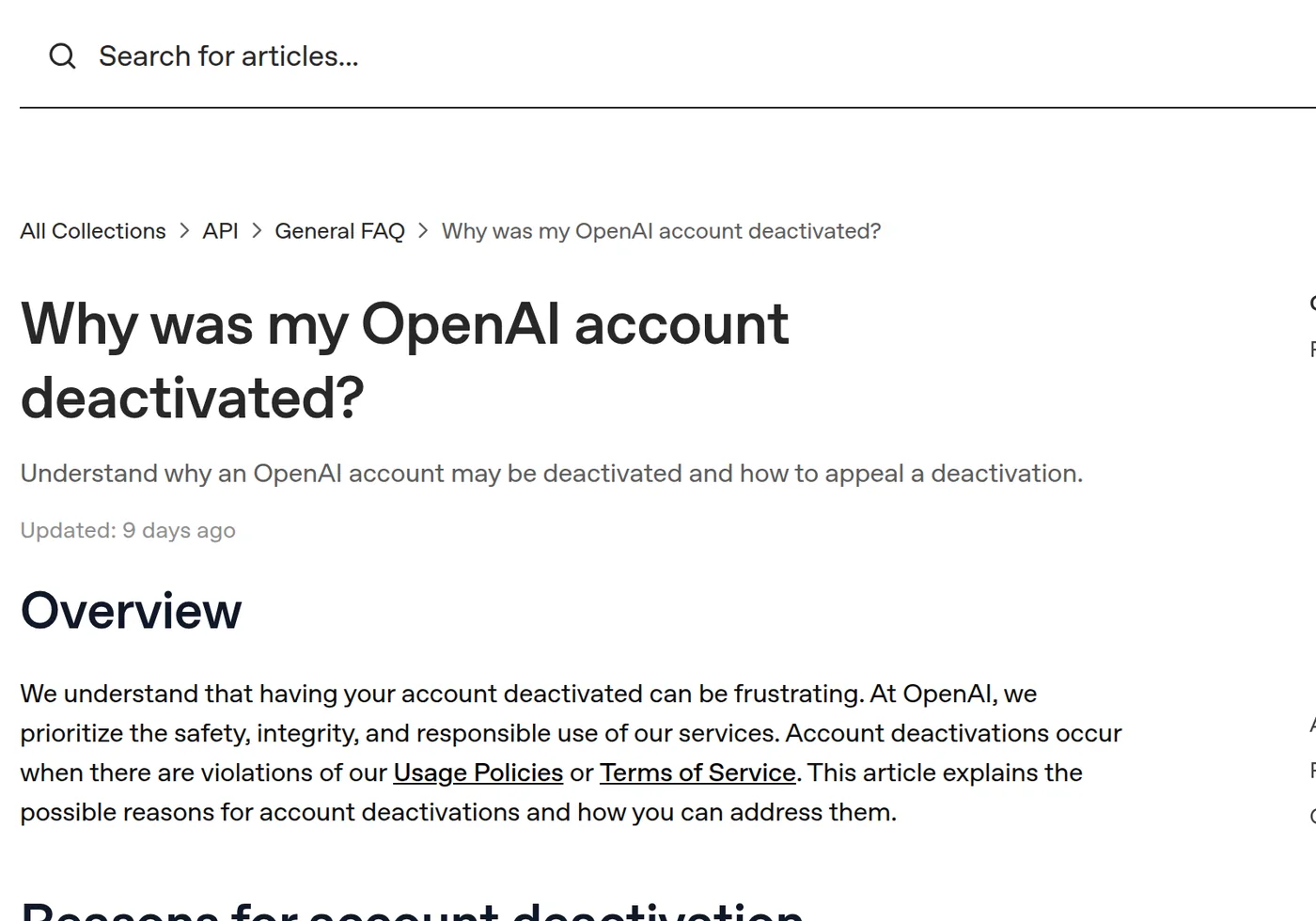
There is a difference between a single refusal and a notice that your account has been flagged or deactivated. The first is routine; the second has a process, and the process starts with reading the notice correctly. This article is about that narrower situation — how to tell a flag from a warning, how to appeal through the official channel, and what makes an appeal more or less likely to be looked at. It assumes you are using the product legitimately and simply need to resolve a mistake.
Warning, flagged, deactivated: three different things
| What you see | What it usually is | What to do |
|---|---|---|
| A single response is refused | A content-policy filter declined one request | Restate the request with clear, honest context, or move on |
| A warning message or in-product notice | The system flagged a request or a pattern of behaviour | Read it fully; note what it points to; adjust how you phrase things |
| "Account deactivated" / cannot sign in | An account-level action | Use the official appeal channel in OpenAI's help centre |
Only the last row is an account problem. People often treat a single refusal as a ban, or a notice as a permanent ban, and then take actions that make the real problem worse.
Why an account gets flagged
OpenAI evaluates both the content of a request and the pattern around it. Recurring themes that draw attention include attempts to work around the policy, repeated probing of prohibited topics, attempts to obtain disallowed material, and automated use that violates the terms. The specifics live in the Usage Policies and the Terms of Use; because those documents are updated, read the current version rather than a summary from a forum.
What is not published is a rule such as "three violations equals a ban". Anyone quoting a precise count or a guaranteed outcome is guessing. Build your understanding on the policy categories, not on invented thresholds.
If you believe it is a mistake
Genuine misclassification happens, especially with specialised work — security research, medical or legal study, literary writing. The way to handle it is administrative, not adversarial.
- Find the official channel. Account questions and appeals are handled through OpenAI's help centre. Use the contact/appeal route described there; ignore links from search ads or third-party sites.
- Locate the notice. Whether it arrived by email or in the product, re-read it. It tells you which policy area is involved, and that shapes what you address.
- Write a short, factual appeal. State what you were doing, in what context, and why it was legitimate. If a specific prompt was misread, quote it and explain it. Keep it calm and specific.
- Send it once and wait. Repeated messages do not raise the priority, and duplicate or automated appeals can look like abuse.
A successful outcome is possible but not guaranteed; the decision is OpenAI's. Say the same to a client or an employer — do not promise a date or a result you cannot control.
What not to do
- Do not create a new account to continue the same activity. Evading an enforcement action can itself breach the terms and worsens your position.
- Do not chase "unban" services. Paid third parties that promise to restore an account have no special access; they are a common scam. OpenAI's own appeal process is free.
- Do not rely on "jailbreak" instructions. The material that claims to lift restrictions is often the exact behaviour that triggered the flag.
- Do not assume a fixed outcome from anecdotes. Other people's stories are not evidence about your case.
Reducing the chance of a false flag
- Lead with purpose and context. "For an academic literature review, summarise the published debate on X" reads clearly; a bare sensitive phrase does not.
- Keep the request aligned with the stated use. If you say it is for research, do not pivot to a live misuse.
- Avoid pasting sensitive or third-party personal data. It is a privacy risk independently of any policy filter.
- Do not test the filter on purpose. Repeated boundary-testing looks like intent, even if it is curiosity.
How this relates to using AI for content
Businesses using AI to draft or translate content have a practical interest here: an account that gets flagged can halt a workflow. The safer pattern is to keep prompts within the stated purpose, avoid trying to force disallowed output, and keep a human review step for anything published. Guangsuan (光算) helps teams produce multilingual content and handle the search side of it under its Google SEO service. For the wider rules — warnings, limits, and what the policy covers — see the companion guide on avoiding violations of ChatGPT's policies.
Sources
This article describes a general process based on public information. Appeal routes and policy wording are set by OpenAI and can change; confirm the current process in the help centre before you act, and do not treat any outcome as guaranteed.