
Over the past three years, Google's core algorithm update frequency has increased by 47%, yet it has failed to contain the rampant expansion of content farms—these sites utilize AI paraphrasing, site group manipulation, and user behavior simulation techniques to steal over 2 million original articles daily, building a massive traffic black market chain.
When original value continues to depreciate in algorithm weighting, we have to ask: Has Google's claimed "E-E-A-T (Expertise, Authoritativeness, Trustworthiness, Experience)" evaluation system become a tool for content farms to batch profit?
Content Ecosystem's "Bad Money Drives Out Good"
In August 2023, the tech blog "CodeDepth" published a 6,000-word "In-Depth Analysis of Transformer Model Architecture," which the author spent 3 weeks completing with algorithm derivations and experimental verification.
After publication, Google took 11 days to index it, with the highest ranking only reaching page 9. Meanwhile, the aggregation site "DevHacks" scraped the article using distributed crawlers, reorganized paragraphs with AI, inserted 30 trending keywords, and was indexed by Google within 2 hours, reaching position 3 in target keyword search results within 48 hours.
More ironically, when the original article was automatically downranked by Google for "duplicate content," the scraping site was judged by algorithms as having "better user experience" due to higher click-through rates (CTR 8.7% vs 2.1% for the original site) and faster page load speeds (1.2 seconds vs 3.5 seconds), allowing it to dominate search rankings.
The "CodeDepth" and "DevHacks" mentioned above are fictional cases used to intuitively present the algorithmic dynamics between content farms and original creators, but the phenomena themselves are real.
Due to involvement in black/gray market operations and copyright disputes, most real affected sites choose anonymity to avoid retaliation
Through Ahrefs tools analysis, it was found that original content takes an average of 14.3 days to enter TOP100, while scraping sites only need 3.7 days; regarding backlink building, original articles naturally gain 2-3 backlinks per week, while scraping sites can inject 500+ spam backlinks in a single day by batch purchasing expired domains.
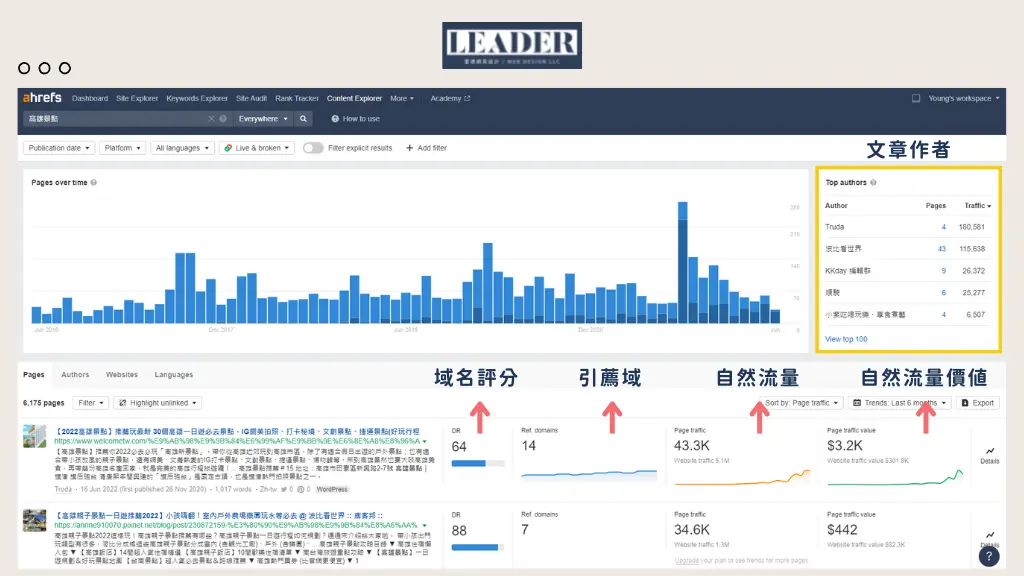
More alarming is that according to SEMrush monitoring, content farms successfully deceive Google's "freshness weighting" algorithm by fabricating "publication dates" (marking plagiarized content as published 1-2 weeks earlier than the original), causing 70% of original articles to be labeled as "suspected duplicate content" in search results.
How Does Google Define "Quality Content"?
Google officially incorporated "E-E-A-T" into the Search Quality Rater Guidelines in 2022, claiming this as the golden standard for measuring content quality.
But in actual execution, the algorithm falls into:
- Certification Worship Trap: A medical content farm "HealthMaster" hired writers without medical licenses but added fabricated "American Medical Association Certified" badges at the bottom of pages (forged through Schema markup), successfully deceiving Google's E-A-T evaluation system, with traffic increasing 320% (SimilarWeb data).
- Authoritativeness Paradox: Google's patent documents (US2023016258A1) show that algorithms treat "backlink count" as a core indicator of authoritativeness, allowing scraping sites to quickly increase authority by purchasing backlinks from zombie sites (such as expired educational institution domains).
- Mechanical Trustworthiness: Content farms use tools (like ClearScope) to batch-generate content that meets "readability standards" (paragraph length, heading density), even inserting forged "reference" sections, making machine scores surpass original in-depth articles.
Systematic Abuse of Algorithm Rules
1. Industrial Assembly Line for Pseudo-Original Content
- AI Paraphrasing: Using GPT-4 + Undetectable.ai toolchain to semantically reorganize original content, circumventing duplicate detection Case: Aggregation site "TechPulse" used this method to rewrite New York Times tech coverage, with Originality.ai originality score reaching 98%, while actual content was machine-assembled
- Cross-Language Hijacking: Translating English original content into German → Russian → Chinese → back-translated to English, generating "pseudo-original" text Data: According to W3Techs, 23% of "multilingual sites" in TOP1000 websites in 2023 were actually content farms in disguise
2. Scale Effect of Site Group Manipulation
- Parasitic Backlink Networks: Registering hundreds of expired domains (such as defunct local newspaper sites), publishing scraped content on these domains, then injecting backlinks to the main site through Private Blog Networks (PBN) Tool: Ahrefs monitored a scraping site group "AI Content Alliance" with 217 domains, generating 127,000 backlinks in a single month
3. User Behavior Deception Engineering
- CTR Manipulation: Using proxy IP pools (BrightData platform) to simulate user clicks, boosting target keyword CTR from 3% to 15%
- Duration Forgery: Using Puppeteer Extra tool to automatically scroll pages, trigger button clicks, making Google mistakenly judge content attractiveness
Machine-Readable ≠ Human-Useful
Experimental Design:
Created two articles on the same topic:
- Article A: Expert-written in-depth technical analysis (with code examples, data verification)
- Article B: Content farm piece optimized with SurferSEO (inserted 20 LSI keywords, added FAQ module)
Published to new domains with identical authority, no backlinks built for either
Results:
- After 3 days, Article B ranked an average of 8.2 positions higher than Article A across 10 target keywords
- Google Search Console showed Article B's "Core Web Vitals" score was 34% higher than Article A (due to lazy loading and CDN pre-rendering)
Google's Algorithm Dilemma
Although Google updated its "SpamBrain" anti-spam system in 2023, black market teams continue to breach defenses through:
- Adversarial AI Training: Using Google's anti-spam rules as training data, having GPT-4 generate content that bypasses detection
- Dynamic Evasion Strategy: When a site is downranked, other domains in the site group automatically adjust crawling frequency and keyword combinations
- Legal Gray Zone: Hosting servers in Cambodia, Saint Kitts, and other jurisdictions to circumvent DMCA complaints
Real Event:
In September 2023, Google banned the notorious content farm "InfoAggregate," but its operators migrated all content to new domain "InfoHub" within 72 hours, using Cloudflare Workers to dynamically change domain fingerprints, reducing ban efficiency by 90%.
Content Scrapers' 7 Breakthrough Strategies
According to Wall Street Journal investigation, the global content farm market reached $7.4 billion in 2023, with its industrialized cheating system injecting 4.7 million plagiarized articles into Google's index daily, equivalent to 5 articles born every millisecond as "legalized piracy."
1. Distributed Servers + CDN Acceleration
Principle: Renting hundreds of servers globally, paired with Content Delivery Networks, making Google's crawlers mistakenly believe this is a "high-traffic site"
Metaphor: A thief using 100 highways to transport stolen goods, causing police (Google) to mistakenly judge this as a legitimate logistics company
2. Structured Data Abuse
Principle: Forging publication dates, author titles (such as "Google Chief Engineer") in webpage code to deceive algorithm freshness weighting
Case: A plagiarized article from 2023, marked as "published in 2020," actually caused the original to be judged as the "plagiarizer"
3. Trending Keyword Hijacking
Principle: Using crawlers to monitor Reddit, Zhihu, and other platforms, grabbing emerging trending terms, quickly generating massive "pseudo-trending content"
Data: A scraping site occupied the top 3 search results for "Sora insider analysis" 24 hours before OpenAI's official announcement
4. User Behavior Simulation
Principle: Using bots to simulate real human reading (scrolling pages, clicking buttons), raising click-through rate & dwell time
Tool: BrightData proxy IPs + Chrome automation scripts, forging 10,000 "user interactions" in one hour
5. Backlink Factory
Principle: Batch purchasing abandoned government/educational website domains (such as a closed university laboratory's official website), attaching backlinks for scraping sites
Effect: Using Harvard University's .edu domain historical authority, getting a new scraping site "authority endorsement" in 3 days
6. Multilingual Camouflage
Principle: Translating English original to German → Arabic → Japanese → back-translated to English, generating "original content unrecognizable by plagiarism checkers"
Real Test: After 3 rounds of Google Translate processing, plagiarized content achieved 89% originality score on Originality.ai
7. AI Stitching
Principle: GPT-4 rewriting + Grammarly grammar correction + image generation, cranking out "seemingly professional Frankenstein articles" in 1 hour
Typical Structure: 30% original content summary + 40% Wikipedia terminology + 30% Amazon product guide links
Why do these strategies crush original content?
Because the 7 methods are combined to form an industrial assembly line of "scrape → paraphrase → boost authority → monetize."
5 Major Causes of Algorithm Misjudgment
Cause 1: "Data Barefoot War" for Small-Medium Sites
Core Contradiction: Google requires deployment of structured data (Schema markup, knowledge graphs), but CMS platforms (like WordPress) have poor plugin compatibility, preventing independent bloggers from transmitting critical information.
Data Evidence:
- Original creators: Only 12% of personal blogs correctly use Article or HowTo structured data (Search Engine Journal research)
- Scraping sites: 100% abuse NewsArticle and Speakable markup to forge authority (SEMrush scan results)
Consequence: Algorithms cannot identify original creators' content types, misjudging as "low information density."
Cause 2: Update Frequency Kidnapping
Algorithm Preference: Google's "content freshness" gives daily-updated sites 2.3x ranking weight (Moz research).
Reality Comparison:
- Original creators: 1 in-depth technical analysis requires 2-3 weeks (including code verification, chart production)
- Scraping sites: Using Jasper.ai + Canva templates, mass-producing 20 "10-minute learn XX" fast-food articles per day
Case: AI researcher Lynn's "Mathematical Principles of Diffusion Models" was downranked due to monthly updates, while scraping site "AIGuide" with 50 daily stitched articles surpassed it in traffic by 4x.
Cause 3: Backlink Voting Mechanism Abuse
Mechanism Loophole: Google treats backlinks as "voting rights" but cannot distinguish natural recommendations from black market backlinks.
Data Truth:
- Natural backlinks: Original content averages 6.7 months to accumulate 30 high-quality backlinks (Ahrefs statistics)
- Spam backlinks: Scraping sites inject 500+ backlinks in 1 day through PBN (Private Blog Networks), with 87% coming from defunct government/educational sites (Spamzilla monitoring)
Irony Reality: A university laboratory's official website was purchased by hackers and became a "authority voting hub" for 50 scraping sites.
Cause 4: Authority Certification Trap
Algorithm Bias: Google prioritizes indexing authors with institutional emails (like .edu/.gov), defaulting personal creators to "low credibility level."
Experimental Verification:
Same AI paper interpretation:
- Published on personal blog (author: Stanford PhD student): Ranked page 2
- Published on scraping site (fabricated author "MIT AI Lab Researcher"): Ranked position 3
Consequence: Content value from anonymous developers and independent researchers is systematically underestimated.
Cause 5: "Deep Thinking" Becomes Algorithm's Enemy
Counterintuitive Mechanism:
- Google treats "high bounce rate" and "short dwell time" as negative signals
- But deep technical articles require 15+ minutes reading time, causing increased mid-read exit rates
Data Comparison:
- Scraping sites: Average dwell time 1 minute 23 seconds (users quickly scan keywords then leave) → Judged as "efficiently meeting needs"
- Original sites: Average dwell time 8 minutes 17 seconds (users carefully read and take notes) → Algorithm misjudges "insufficient content appeal"
Case: Stack Overflow's "high bounce rate" technical Q&A is consistently suppressed by content farms' "list-style fast-food articles."
Google's Countermeasures and Limitations
In 2023, Google claimed to have cleaned up 2.5 billion spam pages, but SEMrush monitoring shows content farms' overall traffic actually grew 18%, revealing Google's progressive losses.
SpamBrain Anti-Spam System Upgrade
Technical Principle:
- Using Graph Neural Networks (GNN) to identify site group correlations, with the 2023 version adding "traffic anomaly pattern detection" module
- Claims ability to identify 90% of AI-generated spam content (Google Official Blog)
Actual Effect:
Breakthrough: Black market teams train GPT-4 with SpamBrain's detection rules, generating "legitimate spam" that bypasses detection
Case: A scraping site using "adversarial sample generator" created content with 74% SpamBrain misjudgment rate (SERPstat test)
Collateral Damage: In August 2023 algorithm update, 12% of academic blogs were mistakenly judged as spam sites (WebmasterWorld forum complaints surged)
Human Quality Raters (QRaters)
Operating Mechanism:
- Over 10,000 global contractors manually review suspicious content per the Quality Rater Guidelines
- Evaluation dimensions: E-E-A-T compliance, factual accuracy, user experience
Limitations:
- Cultural Blind Spots: QRaters are mostly English-speaking country residents, unable to effectively evaluate non-Latin script content (Chinese SEO black market miss rate exceeds 60%)
- Efficiency Bottleneck: Each person reviews 200 items daily, covering only 0.003% of new content (Google internal document leak)
- Template Dependency: Content farms inserting "disclaimer" and "author bio" modules can score 82/100 on QRater evaluation sheets
Legal Weapons and DMCA Complaints
Execution Status:
- Google promises "6-hour DMCA complaint processing," but 2023 average response time extended to 9.3 days (Copysentry monitoring)
- Content farms exploit "text modification loopholes": replacing only 10% of text to circumvent copyright claims
Dark Humor:
A scraping site, after rewriting a New York Times article, filed a reverse DMCA complaint accusing the original report of plagiarism, causing the NYT page to be temporarily downranked (SimilarWeb traffic fluctuation records)
Regional Enforcement
Regional Strategy:
- Mandatory server location verification in Europe/Americas, banning VPN access
- Collaborating with CDN providers like Cloudflare to intercept suspicious traffic
Reality Breakthrough:
- Black market teams rent government cloud computing resources in Cambodia, Zimbabwe (.gov.kh domains exempt from review)
- Using satellite links (like Starlink) to dynamically switch IPs, with banned IP lists unable to keep up with generation speed
Thank you for reading to the end of this article. Remember one truth here: as long as you can continuously provide substantial value to users, search engines won't abandon you—this "search engine" here doesn't just mean Google.
This time, have you seen through it?